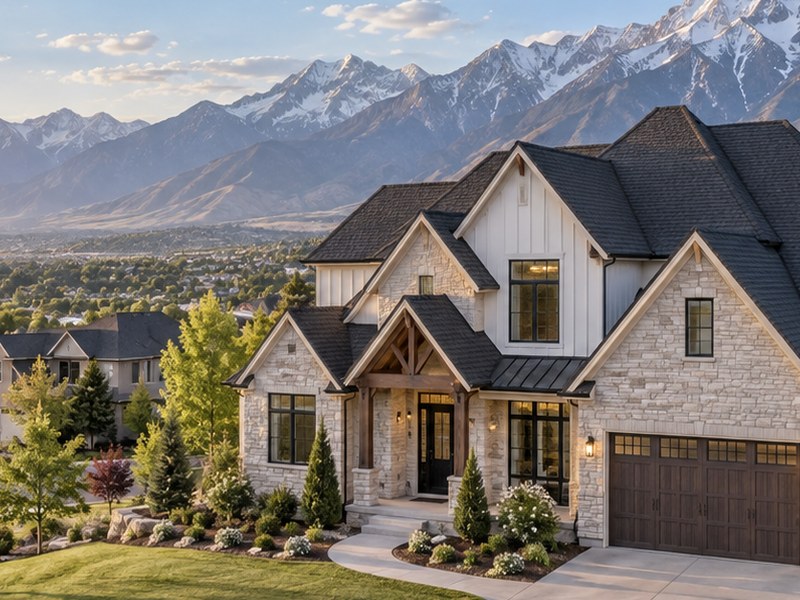
Roof geometry
Complex rooflines, valleys, dormers, and transitions affect both the roofing work and the final appearance.
Custom Home Builders
Complex rooflines, finish details, material combinations, communication, and timing all shape the roofing portion of a custom home. UVR helps builders keep that scope connected to the rest of the project.
Custom-Home Roofing Considerations
The homeowner hired you to build the house. Every subcontractor you bring onto it reflects on you, and the roofing portion should be one less thing you have to chase.
Complex rooflines, valleys, dormers, and transitions affect both the roofing work and the final appearance.
Roof penetrations and roof-to-wall details need to be understood within the agreed roofing scope.
Shingle, tile, metal accents, and flat or low-slope sections may require more than one roofing system.
The roofing window has to make sense alongside site readiness and the project's broader schedule.
The roofer is working on the builder's project, and communication and finished appearance matter.
When to Talk With UVR
Share the expected roofing system or material, location, rough scope, and project timing.
Confirm current project details and the expected roofing window.
Review roofing requirements and the verified systems available for the scope.
Communicate changes that affect roofing scope, materials, interfaces, or timing.
Address agreed roofing questions and project needs tied to the roofing scope.
Why a Roofing Specialist Matters
Transitions, interfaces, system selection, communication with the construction team, and the roofer's conduct on the homeowner's project all affect the builder's experience.
UVR handles the agreed roofing scope. Architectural and engineering responsibility remains with the appropriate project professionals.
Roofing Systems
Custom homes may use more than one roofing system depending on geometry, materials, and project requirements. UVR does not design the roof system; we review the roofing scope and project fit.
UVR can support multiple active roofing projects and builder schedules where scope, materials, timing, geography, and logistics allow.
What Happens Next
Send the location, project type, available plans or specifications, and expected timing.
Review the systems, materials, geometry, and roofing requirements that are known.
We evaluate scope, materials, geography, logistics, and current capacity.
The roofing work is coordinated within the agreed scope and project timing.
We complete the agreed roofing work and address roofing-related questions tied to it.
Professional FAQ
Straight answers about what we can provide, where we work, and how the next step is handled.
Asphalt shingles, metal, tile, TPO, EPDM, and flat or low-slope systems. A custom home may use more than one system depending on the roof geometry and project requirements.
We evaluate complex rooflines and the roofing scope case by case, including valleys, dormers, transitions, penetrations, accent areas, and low-slope sections.
Contact us early enough to discuss the expected roofing system, scope, location, and timing, then update us as the roofing window and project details become clearer.
Yes. Note that plans or specifications are available in the form, and our team can discuss the appropriate way to share them. This page does not promise a formal plan-review service.
We can review roofing material requirements as part of determining scope and project fit. Architectural and engineering responsibility remains with the appropriate project professionals.
Communicate changes that affect roofing scope or timing as early as possible. We will review the updated schedule against materials, geography, logistics, and current capacity.
We discuss the roofing window, site conditions, and interfaces that affect the roofing work. The exact coordination approach depends on the project team and scope.
Yes. Metal, TPO, EPDM, and flat or low-slope systems are among our verified capabilities, along with asphalt shingles and tile.
UVR can support multiple active roofing projects where scope, materials, timing, geography, and logistics allow. Capacity is reviewed with the builder.
Installation workmanship warranties are generally two to five years depending on the project. Confirm the written warranty terms for the specific scope.
Manufacturer coverage depends on the selected product and system. We can identify the applicable manufacturer information for the project.
Utah County and Salt Lake County.
Call (801) 227-4479 or use the custom-builder inquiry form on this page.
Professional Inquiry
Name is required. Provide either a phone number or email. Everything else helps us understand the property, project, or referral before we follow up.